Make Pine Look Like Knotty Alder Family Handyman
Does your forest stain e'er turns out blotchy? You lot might need some pre-stain wood conditioner! Learn how it works and how to apply information technology!
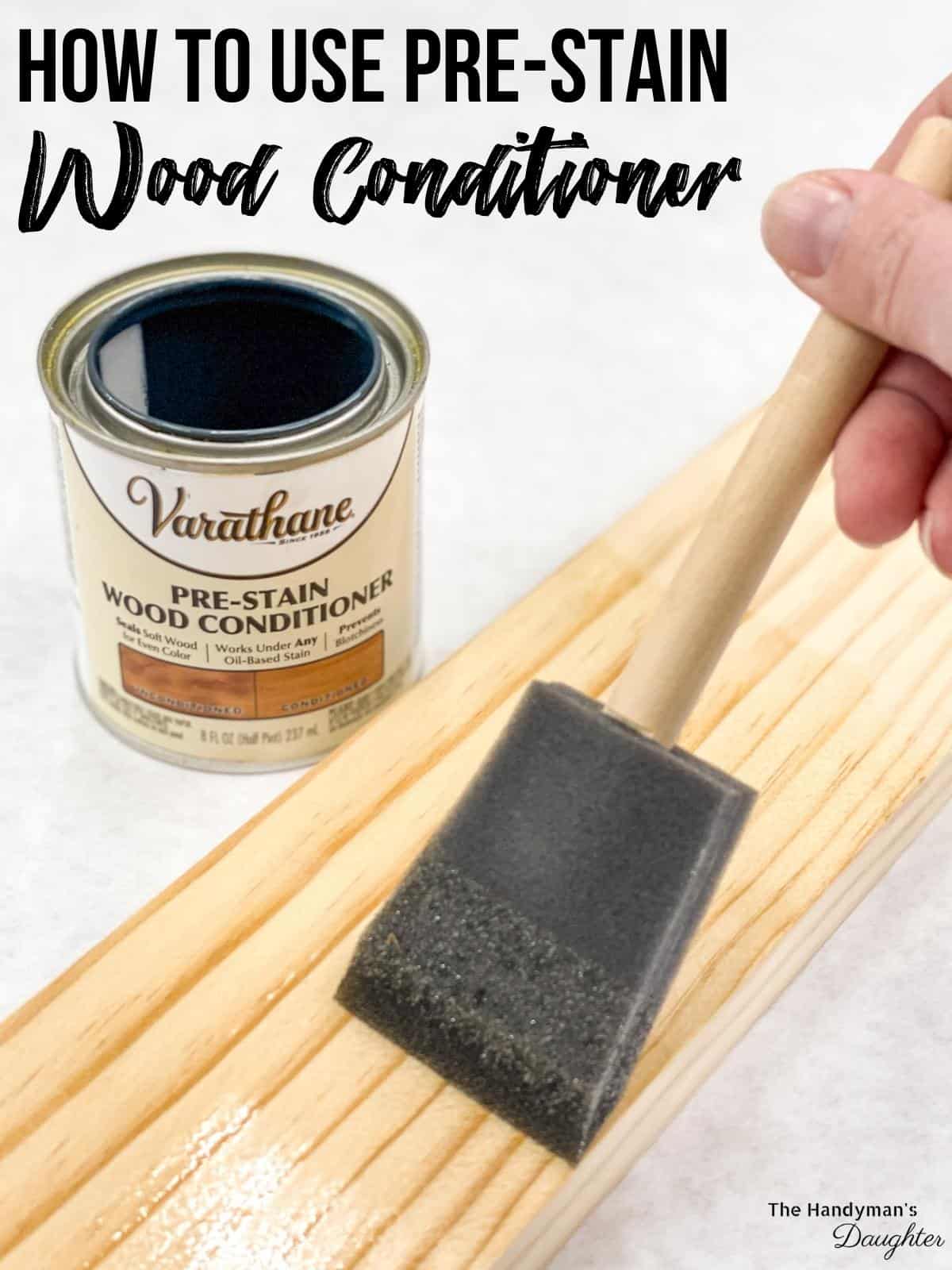
A pre stain wood conditioner is like a primer for stain. In porous woods, the grain oftentimes absorbs stain unevenly. Applying a woods conditioner helps stabilize the grain, giving your project a cute finish.
Beneath, we discuss several types of pre-stain woods conditioners and how to utilise them. Let'southward figure this out!
What is Wood Conditioner?
Some wood species are more agreeable to stain than others. Soft or porous woods similar pine are easy to utilize, but has an open grain that can cause uneven stain absorption.
Forest tin can soak up wet inconsistently, depending on the grain management and knots. This can cause some areas to retain more than stain than others - which can crusade the wood to expect blotchy!
You can see the variation between the light and dark areas of this birch plywood, equally well equally the pine trim, on the barn door I built. Luckily, the plywood was subconscious backside layers of wood shims, only the outside frame could have used a pre-stain to fifty-fifty out the color.
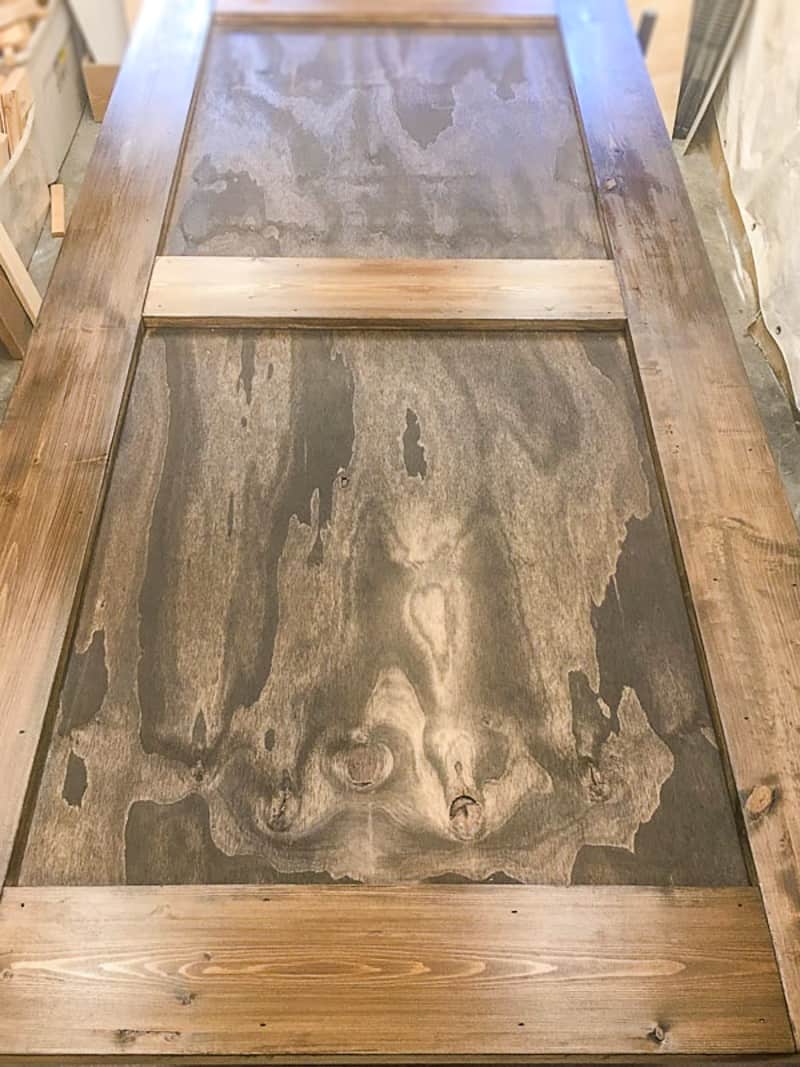
This blotchiness is what we're trying to avoid, unless you lot like the rustic look. When you apply a stain, your goal is to bring out those beautiful, natural grain patterns. For some types of forest, achieving a clean finish is hard without a stain conditioner.
What Does Woods Conditioner Exercise?
A stain conditioner works past filling the pores in the wood. Recall of this similar construction workers filling potholes in a road before applying blacktop.

With the uneven grain management and knots filled, the stain can castor on smoothly for a compatible finish without unsightly blotches.
Which Woods Species Require Pre-Stain Conditioner?
Here's a listing of several types of wood that could benefit from pre-stain conditioner:
- Pine
- Fir
- Spruce
- Birch
- Maple
- Alder
As you might discover, both softwoods and porous hardwoods are on the listing. More than expensive hardwoods like oak and walnut have a tighter grain, so the conditioner will be less helpful (and why are y'all staining walnut, anyway???)
The quality of the wood as well matters. For example, you'll see more blotches later staining construction grade pine 2x4 boards than you volition after staining a perfectly milled piece of pino.
If y'all're curious to run across a exam, here'due south a video showing conditioner on both hardwoods and softwoods.
Different types of woods conditioner
There are two types of commercially available stain conditioner - water-based and oil-based. Oil and water don't mix, and then brand sure you use the same base for both the conditioner and stain.
Oil based forest conditioner
An oil-based pre-stain conditioner is for use with oil-based stains. The main affair to know virtually oil based stain conditioners is that yous'll probable be dealing with more VOCs (volatile organic compounds), and so it's smart to apply this stuff in an open up area.
The second thing about oil-based products is that you'll need mineral spirits to clean information technology up. For this reason, I recommend using a cheap foam brush that you tin simply throw away when you're done.
H2o based wood conditioner
Use a water-based pre-stain forest conditioner with water-based stains. With a water based stain conditioner, y'all don't need to worry as much virtually strong smells and harmful fumes. Many people similar water-based products considering you can easily clean it upward with soap and h2o.
You can see how well water based wood conditioner works on pine in the video below.
Shellac
Shellac is typically used as a cease, but can be used nether stain every bit a wood conditioner as well. Specifically, you should use dewaxed shellac, also called sanding sealer. You can dilute the shellac with denatured alcohol, or use it total force on particularly tricky wood species.
DIY woods conditioner
Hither are a few like shooting fish in a barrel options for making your own wood conditioner that you lot probably have in your pantry:
- Black tea. Brew a potent cup of black tea. Allow it to cool, and so wipe it onto the wood.
- Coffee. Non a tea drinker? Endeavor coffee instead! Apply information technology to the wood the same way equally tea.
How in the earth does coffee and tea piece of work equally a pre-stain conditioner? The tannins in coffee and tea react with the pores in the woods, leading to a more than uniform surface for the stain. I would recommend testing your brew on a fleck slice of wood start, and only employ it under water-based stains.
Yous tin as well use a mixture of wood mucilage, water-based articulate terminate and water to create what is chosen "glue-size." Y'all may have noticed that forest mucilage prevents stain from soaking into the woods, which creates light spots at the joints that tin seriously mess upwardly your projection.
You can have reward of this by diluting the wood mucilage with water and clear stop and applying it to the entire surface. The video below shows you how.
How to Apply Forest Conditioner
At present, permit's learn the steps for applying wood conditioner. This department will give you the general guidelines, but each brand and type of pre-stain conditioner might have slightly different steps. Follow the instructions on the container - information technology saves more hassle than you think!
- Sanding. If you lot oasis't already, sand your blank wood to at to the lowest degree 180 dust. Information technology's important to sandwith the grain and avoid over or under-sanding any one location - skilful sanding can forbid a lot of blotchiness!
- Smooth information technology out. Use wood filler or wood putty to fix any holes or dents in the surface of your board if necessary. Check the label to ensure that the filler or putty is stainable!
- Cleaning. Make sure the wood is clean and free of dust. I recommend using a tack cloth to wipe upward whatsoever dust you may non be able to meet.
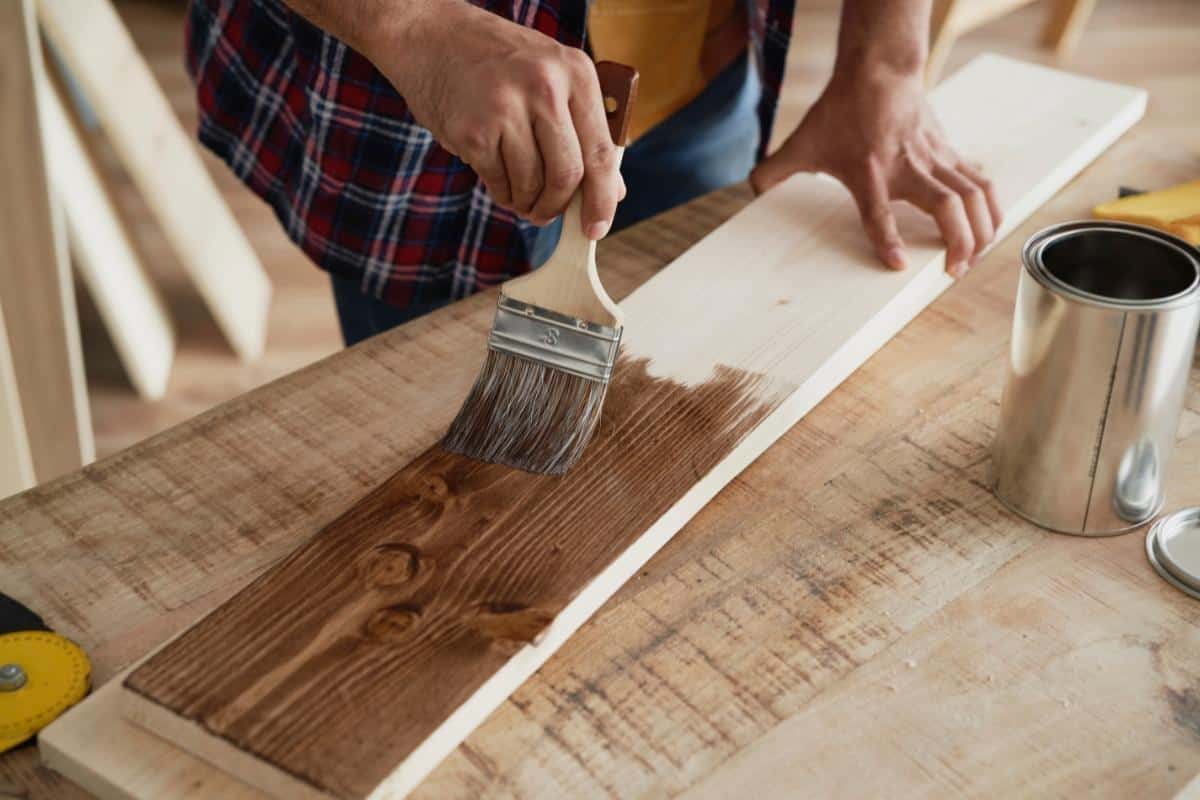
- Apply the pre-stain. Wipe the pre-stain conditioner onto the forest with a rag or cream brush. Try to be as fifty-fifty every bit you can, though don't stress it - y'all'll wipe off whatever excess later.
- Wait. Subsequently near 5 minutes, wipe any backlog pre-stain away. Virtually manufacturers recommend applying the stain in a window between 15 minutes and two hours, but consult the can for specific dry times. Applying stain too shortly may but dilute the color without preventing blotching, but waiting too long may prevent the stain from soaking in at all!
- Apply the stain. Wipe the color over the entire surface with a rag or castor and allow it to soak in.
- Wait and wipe clean. Wipe away any excess stain after a few minutes.
- Utilise a height glaze. Protect your stained forest with a clear superlative coat. Stain by itself doesn't offer any protection confronting wet, and may come off on your hands or clothing.
Frequently Asked Questions well-nigh Wood Conditioner
What happens if wood conditioner is left on for also long?
Some products recommend that yous stain inside two hours of applying the wood conditioner. If you forget and don't come back to your project until much later, the conditioner volition deed more like a sealer, and prevent the stain from penetrating into the wood.
If you left your forest conditioner on for besides long, y'all tin lightly scuff upward the surface with 220 grit sandpaper.
Does wood conditioner brand stain darker?
In general, forest conditioner does not make stain darker. Well-nigh people will observe their stain is slightly lighter after using wood conditioner. The reason is that the conditioner prevents uneven absorption of the stain. In the process, it prevents equally much stain from existence absorbed overall, leading to a lighter colour.
What happens if I don't apply conditioner before staining?
If yous don't use a pre-stain wood conditioner, your stain could stop up looking blotchy, about like someone spattered unlike amounts of stain in different areas. The effectiveness of wood conditioners varies based on the woods and the stain, so exist sure to test before committing to an entire projection.
Do y'all sand after using forest conditioner?
Afterwards using a water-based wood conditioner, you might detect the grain raises and feels rough to the touch. Yous can utilise fine-dust sandpaper to smooth out the surface. For oil-based products, once you've sanded initially, you won't need to sand once again.
At present you know the hugger-mugger powers of pre-stain conditioner! If you've been noticing your stain looks blotchy, then this extra step might be only the thing to bring out that gorgeous wood grain on your next project.
Check out these other staining tutorials!
Source: https://www.thehandymansdaughter.com/wood-conditioner/
0 Response to "Make Pine Look Like Knotty Alder Family Handyman"
Postar um comentário